Saturday, June 28, 2008

Eddy Grant Back in Action

Eddy touring again


How Eddy Grant gave hope to South Africa

(After years out of the limelight, the man behind a song that became an anti-apartheid anthem returned as one of the stars of Nelson Mandela’s concert. )

(Telegraph) – When Nelson Mandela broke his long silence to denounce Robert Mugabe’s regime in Zimbabwe on Wednesday, it only heightened the expectation and intrigue surrounding yesterday’s 90th birthday concert for him in Hyde Park.

The show itself promised to bring together a good number of the pop musicians whose protest against Mandela’s incarceration at a similar concert in 1988 was ultimately rewarded with his release two years later.

One performer, who was not present that day, but has been included this time around, is the author of a song, which many saw as the very anthem of apartheid’s demise. Eddy Grant’s “Gimme Hope Jo’anna” hit the UK top 10 in January 1988. More importantly, it was banned by South Africa’s government, and thus, with its gambolling African beat and incisive lyrical idealism, it achieved a huge popular resonance there, in the drive to end the regime.

His performance of it at yesterday’s bonanza doubtlessly prompted many people to ask: “Eddy Grant - whatever happened to him, eh?”
The singer last toured in this country 22 years ago. His big moment came in the early eighties, with massive hits such as “I Don’t Wanna Dance” and “Electric Avenue”, but some time after “Gimme Hope Jo’anna”, he slipped off the pop radar.
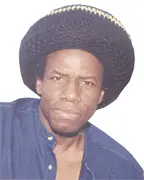
Eddy Grant Eddy Grant
By coincidence, Eddy had long been planning a world tour this summer, to follow on from his 60th birthday in March. The Mandela concert came at a fortuitous time. By an even greater coincidence, he has been rehearsing for it in Johannesburg - the Jo’anna of the tune’s title.

He explained to the Telegraph how his search for a backing band led him here - to a group of newly unemployed musicians, who had served many years behind Lucky Dube, the South African reggae titan who was shot dead by carjackers in Johannesburg last October.
The unrest in Alexandra township, where black South Africans have been beating and killing immigrants and refugees from neighbouring countries such as Zimbabwe, means that their nearby rehearsal studio is off limits.

The irony of discussing an anti-apartheid protest song, whose mission to “make Jo’anna see how everybody could a-live as one” could now be levelled at black-on-black aggressors in the city, clearly weighs heavily on Eddy‘s mind.

“Xenophobia is a big issue here,” he says, “but it’s not exclusive to South Africa. I’m not making excuses for South Africa, but I have come to understand the way the world works. I’ve been telling people here, ‘This thing will pass, just like apartheid passed.’“
Some might be surprised to hear Eddy speaking with such sage-like authority. In critical circles at least, he is dismissively remembered as an opportunist British answer to Bob Marley, a purveyor of “reggae-lite”.

That assessment is wide of the mark: his biggest hits had an electro-pop dimension, which was astonishingly forward-thinking for its time. It’s also a little-known fact that he wrote, performed, produced and released all of them himself, on his own label. In the mid-eighties, he shrewdly acquired the publishing rights to his back catalogue, with the result that, unlike the vast majority of artists, all the royalties for his work go to him.

In Guyana, where he was born, and lived until he was 12, Eddy is a national hero, a role model for self-advancement. His face has adorned four different postage stamps. He left there when his father, a jazz trumpeter, moved the family to a cramped basement in Kentish Town, north London. As a black immigrant in sixties Britain, Eddy was inspired by British pop, as well as James Brown, whose self-determination he later sought to emulate. He made his first sortie into music-making in the late sixties as lead guitarist with arguably Britain’s first inter-racial beat group, the Equals. He wrote their number one hit, “Baby Come Back”.

After three years of intensive touring, he suffered a heart attack and retreated from the limelight. In his newly-bought pile in Stamford Hill, he built Europe’s first black-owned recording studio, then, equally ground-breakingly, set up his own label, Ice Records, and even his own record-pressing plant.

“I wanted to own a black bank, too,” he adds, “because I couldn’t get the money to support my ideas.” When he came back as a solo artist in 1979 with “Living on the Front Line”, his empire was in place. He duly moved back to the Caribbean, not to Guyana, but to a historic plantation house in Barbados. There, he built another studio, and recorded his big album, 1981’s ‘Killer on the Rampage’, much of it charged with subtle political messages.

“‘I Don’t Wanna Dance’ can mean that you don’t want to go out on the dance floor,” he says, “or it could mean that you don’t want to go along with an idea. That’s how I try to write: you take it how you want, but I am basically a writer of protest.” In that light, the song was his farewell to Britain as a land of class and colour divisions. His run of UK hits was broken when “War Party” was denied airplay during the Falklands conflict. Thereafter, Eddy focused his efforts on his native region.

Ice Records began a programme of calypso re-issues, a beneficent gesture, which may have been funded by more businesslike ventures such as the bastardised version of “Gimme Hope Jo’anna” used on an advert for a yogurt drink.

Eddy continued to release his own music locally, and mentored a raft of young Caribbean artists, whom he has provided with a generic identity, Ringbang, and a strong capitalistic and cultural ethos. “If we’re going to sell ourselves to America,” he reasons, “our value to them is being who we are, not trying to be them. That’s why preserving the old music is important. The world is made up of many different people. If you were to put all their strengths together, then you might get a better world.”

At 60, Eddy is in fabulous shape (being teetotal has surely helped). He’s a tough cookie, certainly not shy of bigging himself up, and only rarely given to moments of expansive idealism.

It transpires that he has spent a fair amount of time in Africa, having set up a distribution deal there in the eighties. So, “Gimme Hope Jo’anna” was written out of experience, not airy-fairy political correctness.

Eddy also plays at Glastonbury Festival tomorrow. On Monday, his 10-date UK tour opens in Brighton, and ‘The Road to Reparation: The Very Best of Eddy Grant’ is released, through a one-off deal with Universal.

Monday, June 9, 2008

Lyrics - Mystic GT Girl

She's my baby she's my one and only
she's a girl she will never leave me
she's the one who will always be by my side
she's my princess she will never leave me
she's a girl she will never hurt me
She's the one who will always my number one

Beautiful, intelligent and charming for sure
You got the kind of touch that keeps you wanting for more
They will [I have no idea what he says here] strickly hardcore
That's a typical GT girl
They'll Take good care of you just be faithful to them,
They'll be your companion and your best friend
They will stick to you to the very end
And I'm lucky to have one of them

Mannerly kind and well courteous
The kind of girl who will love you up and give you their trust
the way the walk the way the talk will sure to make you lust
that's a typial GT girl
You're looking for a woman that's a virtuous one
who has what it takes to fulfill Jah plan
You found what you've been looking for so long
Well now you can sing this song

I feel so lucky to be here in GT,
To be amongst so many beauties for sure
And I have my baby she's a real cutie
A real Nubian beauty for sure

Accolade - Guyana Music Awards

Saw this on Guyanalive.com. Guyana is going to get a music awards show of it's own.
And the award for best male artists goes to??

The Vision

Accolade coincides with the strategic efforts to “promote Guyana”, by showcasing its rich and diverse arts and cultures. The unique exhibition of our local talent (at another level) is the continuation of the unleashing of our vast potentials in the music industry.

Once again Guyana will be making its mark in the international arena by rewarding artistic excellence in the music industry through a premier event comparable to international Award shows such as the Grammy’s and the one produced by BET.

Indeed, the line up of fantastic performances will represent a climax for the local entertainment diehards and at the same time promote and represent a hype for the local music industry. Guyanese are asked to prepare themselves for an event which can only be billed as an excellent experience - from red carpet entrances to outstanding local and regional performances from a mind blowing awards ceremony to interational celebrity endorsements.

The music industry is at a critical crossroad and deserves every effort to highlight its achievements, motivate its artistes, elevate standards, encourage artistic excellence and utilize talents that may be inclined to engage in negative endeavours.

It is both opportune and ideal that this venture, capitalizing on the positive experiences coming out of Guyana’s successful hosting of Cricket World Cup, (CWC), Rio Summit, Guyana Fashion Weekend and Commonwealth Finance Minister’s Meeting, (CFMM) all held in 2007 and CARIFESTA 2008, be staged at this time.

This celebration of achievements in the music industry will be Guyana’s most prestigous gala event.

“Arrowhead” our promotional group (registered under Business Names: Registration Act Chapter 90:05) is therefore desrious of advancing strategic partnership for high-level media coverage and public participation as part of our inclusive approach to maximize the potential of the music industry.

The Objectives

To recognise, appreciate and reward local artiste and music professionals for their contributions to the striving music industry in Guyana.
To extend motivation and provide exposure for local artistes, all relevant to the growth and development of the music industry in Guyana.
To provide an opportunity for local artistes to market and highlight their talent as a product.
To enocurage and promote qaulity as well as to increase meaningful involvement in an effort to ensure the overall development of the music industry in Guyana.
Live up to the prestige and challenge!

With an event of this magnitude, the music industry will catapult to a new level providing great benefits to be derived all for the maximum advantage of your company.

Coming fully on board will facilitate the upward climb of business by connectiing with thousands of locals, overseas-based Guyanese and non-resident visitors from North America, United Kingdom and Caribbean to more than six events during an eight-month period.

Proposed Dates and Activities

The fantasy of creative entertainment!

June 6th 2008 - Official Media Launch

July 25th 2008 - Cocktail Launch

October 4th 2008 - Accolade Fashion Event

November 30th 2008 - Pre-Show & Cocktail Party Accolade Awards & Mega Show

Friday, June 6, 2008

First Born - Got Style

Firstborn - Irits

Firstborn - Irits

FirstBorn - Headlines

Spotlight: Firstborn


First Born stands for:

F - Forever
I - Inspirational
R - Reaching
S - Souls
T - Teaching
B - Brotherhood
O - Obedience
R - Righteousness
N - Naturally


Guyanese by birth, Rastafarian (by choice) to their very core, this quintet delivers a strain of Reggae music that exuded, spirituality, culture, tremendous brotherly love and originality. Originally conceived as an accapella outfit in the 1990’s, they achieved a breakthrough in 1997 with a live showcase on the Freddy Mc Greggor concert at the Guyana National park, promoted by Vizion Sounds, Walter ‘Wally’ Fraser. The existing of the then line up Troy Azore, Shawn Williams, Trayon Garrett and Lambert Semple, so impressed ‘Wally’ and the late great Dennis Emmanuel Brown with their unique originality that Wally signed them to his label VIZION SOUNDS RECORDS and Dennis Brown offered his special vocals on their debut single ‘Repatriation Time’. This track featuring prominently on their acclaimed follow up album ‘Exodus Chapter XIII Verse 2’ which was recorded at Leggo’s Studio, Kingston, Jamaica with saxophone contribution and musical direction by the magical Dean Fraser. The album gaining two Guyana National Awards for Best New Artists and Best New Group. Rolston Richmond was now welcomed to the unit and has ever since positively added to what is FIRST BORN

Tuesday, June 3, 2008

Copyrights Laws

Modern copyright law still an aspiration

By Gaulbert Sutherland

Almost nine years after President Bharrat Jagdeo said that an updated copyright law was key to the country’s development and voiced his intention to have this in place by the following year, Guyana still has no modern legislation and renewed calls are being made for this in time for CARIFESTA.

But it is highly unlikely that such protection will be afforded to artistes and producers during the regional arts festival, which is due to be held in the latter part of August. Currently, there are consultations ongoing on a draft bill but Minister of Culture, Youth and Sport Dr. Frank Anthony told Stabroek News earlier this year that he did not believe that this would be completed in time for CARIFESTA.

Notwithstanding this, the Guyana Art and Craft Pro-ducers Association (GACPA) is planning to present a petition to the Culture Ministry shortly in an effort to have some form of protection available for locally produced work before the festival.

Back in 1999, President Jagdeo had said that updated copyright laws were key to the country’s development and had stated that he intended to have a draft bill, in circulation at the time, in place by the following year. This, however, has not materialized. Questioned on this last week, former Minister of Culture, Youth and Sport, Gail Teixeira said that the opposition of a group to the draft bill back in 1999 had an impact on it not being laid in parliament.

Copyright infringement is rampant in Guyana and over the years, various artistes and other persons have raised concerns about the lack of such legislation and its effects on their livelihood. Many have left these shores stating that they could not make a living here because of the dearth of such laws.
There have been calls made by persons questioning the effects the lack of such laws would have on artistic works during the regional festival and local entertainer, Rudy Grant, in a letter to this newspaper last year, had said that artistes should boycott Mashramani and CARIFESTA unless copyright laws are enforced. The GACPA too, is calling for some form of copyright protection before the regional festival comes to Guyana.

General Secretary of the association, Denzil Hollingsworth said that with CARIFESTA coming to Guyana’s shores, protection for the works of local artistes and craft producers is vital. She said that the association is seeking copyright protection for local music, crafts and other items produced here and has signed a petition, which they hope to present to the Culture Minister shortly. She said that they are hoping that something can be done before CARIFESTA “because we will have people coming from all parts of the world and we want to protect our stuff”. Hollingsworth alluded to the presence of Chinese-made craft on the market and said that at the moment, the 105-member association is focusing on the protection of locally made artistic works. She asserted that protection is critical so as to encourage continued production.

Local authors of books and textbooks have also complained bitterly about the theft of their work and bookstores have also been in the forefront of the campaign for an updated law.

Cultural issues
Speaking with Stabroek News on the issue last week, Teixeira, who is now the Presidential Advisor on Governance, said that copyright has to do with a number of issues and at the time that she was Culture minister, the one-day consultation that was held on copyright had been focused on cultural issues. She said that at the time Anthony Vieira of the Independent Media Associa-tion had passionately opposed the bill. “It certainly had an impact”, she said, when asked whether this was the reason that it was not laid in parliament as planned.

However, when contacted, Vieira said that he had attended the consultation in his private capacity and as a TV station owner and declared that he had neither supported nor opposed the bill. He said that he had pointed out that that draft legislation was transcribed in a manner that excluded the then GBC and GTV from copyright infringement. “She (Teixeira) was saying that everyone would pay copyright except the GBC”, he stated adding that Teixeira promised that this would be rectified but was never done. He said that after this was pointed out the meeting broke up and another was never held. The television station owner said too that the bill had sought to discriminate between protection for locally produced works and foreign ones and declared that what applied to one had to apply to all.

Meantime, Teixeira stated that copyright was not only about protecting music and artistes but encompasses other aspects such as trademarks as well and is made up of different types of legislation. She said that the consultation held at the Umana Yana in 1999 was to deal with issues relating to culture and a number of recommendations had been made. But, she noted, the issue of an independent regional Non-Governmental Organisation (NGO) to collect and pay out royalties, was a bugbear, not only in Guyana but in the Caribbean.

The Presidential advisor noted though that the Deeds Registry has a copyright desk, where copyright can be registered. “Copyright means nothing unless you register what you have produced”, she said.
Speaking on the issue back in 1999, Jagdeo had said that the priority given to have the legislation enacted was not driven by any pressure on his government to do so. “There is no pressure that I am aware of, with the exception that I feel that it is needed to be in place for our country to move forward”, he had stated. He had said that he found it necessary for the development of some sectors such as “the music industry, the computer software (industry), and some other areas. That’s why I am putting it up as a priority, not because of any pressure.”

The legislation would have replaced the existing Act, which is substantially the 1956 Copyright Act of the United Kingdom insofar as it forms part of the Laws of Guyana. The UK has since updated its Copyright Act and several CARICOM states such as Barbados, Jamaica, Trinidad and Tobago, St. Lucia and Belize have enacted copyright legislation. Guyana is a signatory to the Berne Convention for the Protection of Literary and Artistic Works and is also a member of the World Intellec-tual Property Organization (WIPO).

Trinidad implemented a modern law several weeks ago and it has already begun to have an effect on persons who sell pirated DVDs. (See story on page 5.)
Dr. Anthony had told this newspaper earlier this year that the issue could be approached in two ways, either by making incremental changes to existing legislation or more comprehensive changes and because of the many implications of such laws, discussions had still been ongoing. It is not clear at which stage the consultations are at now.

Copyright law, basically seeks to protect the owners of intellectual property of all kinds so that they can benefit from their creations. This includes literary, dramatic, musical or artistic works, sound recordings, films, broadcasts and cable programmes. The law provides that no one may reproduce these without the permission of the owner of the copyright who is often the author but may be the publisher, broadcaster or other person. In most cases, those persons will require a payment of a fee as a price for giving their consent. These fees vary in different circumstances.

Monday, June 2, 2008

StruckRoot - M

StruckRoot is a four-piece rock band from Guyana, South America now based in Sao Paulo, Brazil. The current line-up comprises of Ricardo Dupret on Vocals, Andre Rahaman on Guitars, Rawle Staunton on Bass and Samuel Constantine on Drums.
The band was formed in March 2004 by guitarist Andre Rahaman and drummer Jude Mendonca who played together previously in a few local bands. Ricardo Dupret was later recruited in April as the band vocalist along with Romeo Yong as their bass guitarist.

Following the success of numerous live shows performing cover songs and developing a strong fan base within the local rock scene, StruckRoot began working on original material to help promote the band locally and record their first Demo EP. During this period Romeo Yong was replaced as bass guitarist, following the return of Jude Mendonca who took a short break from the band only to depart once again due to personal reasons. StruckRoot continued performing live shows throughout the next two years with various bass guitarists and new drummer Samuel Constantine.

In June 2007, StruckRoot began recording at the Brutal Tracks Studio in Guyana, three original songs for their Twisted World Demo EP. Bass guitars were contributed by Rawle Staunton who filled the vacant bass slot in January 2008.

The Twisted World Demo EP includes the songs: Twisted World, The Passing and Purify (now available at www.indiestore.com/struckroot)

Influences of the band include Metallica, Alter Bridge, Alice In Chains, Stone Temple Pilots, Pink Floyd, Sevendust and Tool.

StruckRoot relocated to Sao Paulo, Brazil in 2008 to promote their music to a wider audience. The band recently participated in the Manifest Rock Fest held at the Manifesto Rock Bar in Sao Paulo.

Sign up now with our mailing list at Reverbnation and download Purify for free!

Contact info:

Tel: Andre: 55-11-8814-5770 / Ricardo: 55-11-8825-2602

Email: struckroot@hotmail.com

Web: www.struckroot.com

www.myspace.com/struckroot

Roger Anthony - Answer dem

Roger Anthony - Answer dem

In the News: Roger Anthony aka 'Brains'


Electric Roger from Brains guy to Brutal Jammers front man
Published May 31, 2008
By Iana Seales (Stabroek News)


Roger HassellThe cool aura, electric vibes, raw energy and identifiable voice that defines Brutal Jammers front man Roger Hassell is dished out so often in the local entertainment circuit he has become the poster child of consistent, quality entertainment and is still slogging it out on local soil.

His laid-back attitude readily exposed by the casual clothing on and off stage; the unfussy tone in his voice and that particular facial expression that says, “What’s the big deal?” sort of completes the package of who Roger appears to be.

But without hesitating or attempting to put into words exactly who he is, Roger tells The Scene in an interview on Thursday that he is the same guy whether on stage, in the studio, on the street. There is simply no difference.

But is this the same guy who appeared in those Brains Watch World television advertisements playing the role of a dumb shopper? It is, and the difference a few years made was tremendous. Roger went from Brains employee creating and appearing in ads for the business, to lead vocalist in Brutal Jammers — the top band in the country by any measure, though bookings alone sets it apart.

“I love what I do and have come a far way since Brains. People actually call me Brains, sometimes people I have never seen before. My story is probably the same as everyone else’s, hard work and commitment,” the entertainer says.

He is in one of the studios at Swansea on Waterloo Street where his band and work is based sitting mere inches away from his equipment. Though focused on the interview his eyes wander every few minutes in the direction of the equipment as if his work was silently calling.

Roger admits that work consumes him pointing out that Brutal Jammers is always rehearsing in an effort to stay on top and to perfect its craft. Daily hours are scheduled for rehearsals and he is so serious about every session he rarely misses any.

“It is not play at all and Brutal Jammers can get way much better, we need only practice and keep things going without slacking up. There is always room for error but if we stay focused then the possibility reduces,” Roger said.

He mixes no words about how good Brutal Jammers is, something he credits to the band’s appeal to audiences of all age and its ability to do covers very well. Additionally, he says, the band carefully selects its repertoire for every show and practices within that particular limit. Sometimes Brutal Jammers is booked twice a month and other times, it ends up doing four shows. This, he says, requires that band members put in the hours.

TV to Front man
While still in school Roger and group of friends formed a singing group and performed under the name, ‘Heartbeat’. The group had about eight songs in its collection, the most popular being an R&B number titled, “I’m Sorry”. After three years, the group lost its heartbeat and broke up. Roger says he found employment with Brains Watch World during that time and remained with the store for about three years. He recalls that one day the owner approached him saying that he wanted to do an advertisement. Roger was asked to come up with an idea and after running into local comedian Habeeb Khan, he had an idea and moments later, an ad. The ad was a hit among local audiences and similar ads followed. Roger was officially the ‘Brains guy’.

But Roger teamed up with the Fireclan band while working at Brains and got experience performing at shows. Three years after working with Brains he left to join Brutal Jammers and had also made the decision to leave Fireclan.

When he joined Brutal Jammers Roger says the potential was there for him to grow and for the band to get stronger. It took a few months and soon enough things started falling into place. He says people started booking the band often and crowds started responding in unexpected ways.

Brutal Jammers now plays at almost every show in the country with Roger leading the group in his usual, electric way. The band has played at Crop Over in Barbados and also in Jamaica. Though he loves teaming up with other band members to perform, he points out that solos give him the opportunity to really dig deep and show that individuality that defines him.

Roger reveals that he has around nine songs of his own, one of which is now receiving airplay – “Like that”. He says the song has an R&B flavour to it but points out that he also does reggae, soca and dancehall.

He is also part of a recently formed group called “Cowboys” that also includes local singers, Island Man, Mystic and Bishop. The group already has two songs out, “She want me” and “She rob me” that are creating quite a buzz. Roger hastens to add that no particular female was in mind when the songs were written.

In terms of collaboration, he is eyeing possible projects with some of the best in local music - Timeka Marshall, X2 and Malo.

One thing is for sure, Roger will be carrying the Brutal Jammers band right into Carifesta and beyond. Though he would not put a timeframe on it, he says that eventually he will leave to start a solo career. For now, he is comfortable, satisfied and looking forward to rocking local shows in the way only he knows how.

Tuesday, May 27, 2008

The Origin of Guyanese Music

I found this article online here.

I'm not sure what year it was written by one line says "Guyana fell into a musical coma and remains there to this day." Well Guyana has awaken from the coma, and is now ready to catch up. It's going to be like a koker opening up to let out the flood waters. The rest of the Caribbean is going to be in awe of the diversity of talent coming out of Guyana in a few years. Stay tuned.


THE ORIGIN OF GUYANESE MUSIC by Ray Seales

British Guiana gained Independence from the British in 1966, and is now called GUYANA and as a result of its history the population is comprised of 6 ethnic groups and is the only English speaking country in South America.
The population of Guyana is made up of 40 percent Africans, 51 percent East Indians and the balance Chinese, Portuguese, Europeans and Amerindians .
Regardless of the make up of this society, African heritage has always been the dominant culture which is displayed in their music and folklore while mimicking their European masters who were famous for their grand marching band parades and Sunday concerts in the Botanical gardens.
In the early twentieth century, most former slaves were now living in the capital city of Georgetown working as paid laborers and part time musicians. As slaves, they were accustomed to celebrating the end of the crop season when their masters would allow them to play drums, dance and sing. This is called Quek Queh or Masquerade Music in Guyana and in other parts of the West Indies it is known as” Junkanoo”.They would also sing songs about their devilish masters and make fun of the way they dressed. To their delight , their masters were amused and threw them coins. The Masquerade band is a permanent fixture in Guyanese culture. Singing songs about their former owners shifted to singing songs about everyday life and experiences. Some Africans learned to play the guitar most likely from their European counterparts. Now they were playing chords and singing simple songs about life and sometimes making fun of each other. This was the beginning of Shanto in Guyana, an early form of Calypso.

THE MAKING OF GUYANESE MUSIC

Georgetown, British Guiana at the beginning of the twentieth century, was now set to become the musical capital of the British West Indies.During this era, big dance bands emerged such as Tom Charles and the Syncopators who were famous for their Creole “jump up” music.Harry Whittaker played alto saxophone with the Syncopators Orchestra and was recognized as the best saxophonist in this region until his passing.He is remembered for his fantastic solos on GEMS recordings,but mostly by his work on “Cool Dive”(Jazz) an Al Seales composition recorded in the early 50’s on which the performances are remarkable to this day.The Famous Mootoo Brothers were early East Indian musicians who attempted the fusion of Indian music with Afro rhythms. They were the back up band for many of the Trinidadian Calypsonians who came to Guyana after Carnival including the Mighty Lion. They moved to Trinidad and it is believed this is the origin of “soca chutney “ another form of calypso played on the island of Trinidad . Then there was the talented Al Seales,leader of the Washboards, a true musical visionary who always thought that Guyana’s music should also express their Latin American influence even though they were bound economically and culturally to the British West Indies.He used Latin percussion instruments in all of his arrangements.
This was an early fusion of Latin and American dance music which is what the Washboards played at the time.

The arrival of Bill Rogers singing Shanto and his appearing at local Vaudeville Shows was the beginning of a new musical dimension. He is the most famous Shantonian to come out of Guyana and one of the first to sign a recording contract with a known British Gramophone Record Company “PARLAPHONE RECORDS” where he recorded BEEGEE BHAGEE, DADDY GONE, and SIGHTSEEING IN THE U.K to name a few.It was “Beegee Bhagee” that went world wide after Harry Belafonte allegedly used the song on one of his albums.
By 1940 Carnival in Trinidad was set as an annual festivity. However, in Guyana, the VAUDEVILLE Shows were featuring regularly local and foreign entertainers like Bill Rogers, Lord Sweet Dreams, Lord Coffee, King Fighter, Lord Canary, Mighty Sparrow , Lord Melody, Lord Cristo and many others who came to Guyana after Carnival to learn and improve their performing skills.

COMMERCIALIZATION OF EARLY GUYANESE MUSIC

In 1950, Al Seales, leader of the Washboards Orchestra started GEMS Recording Company. This is the earliest Recording Company in the region to create a complete production from musical arrangements recorded locally on tape, to the manufacturing and distribution of gramophone records, through MELODISC RECORDS of London, England. His first commercial release was “Jumbee Jamboree”. This song was later recorded by the Andrew Sisters and Harry Belafonte of the USA.
This was the most flourishing period musically in Guyana with Al Seales recording some of the Caribbean’s best Calypsonians and local Artists like Doreen Greavsande who was his favorite female vocalist. She is known best for her recording of an original song “Dig Me” on GEMS label . Lord Melody’s “The Devil” and “BooBoo Man” were recorded at GEMS, but again it was Harry Belafonte’s version that was played worldwide, e.g “Boo Boo Man” was originally recorded by Lord Melody on a GEMS label # SM-002A 78 r.p.m gramophone record. This became one of Belafonte’s cover songs and and was also done by the Andrew sisters. GEMS was the vehicle for all popular Caribbean Music during this period and most of their productions were licensed to American Recording Companies without their knowledge or proper agreements.
Al Seales was a musician and a talented artist who hated legalities and was therefore denied his rightful share in a business that exploded into something bigger than he could ever imagine.
Vivian Lee of ACE Records recorded the performances of talented Guyanese artists who appeared at the Vaudeville shows. Billy Moore’s Four Lords, made their debut on this label and went on to record with GEMS Records one of Guyana’s and the Caribbean’s most famous original Christmas songs “Happy Holiday”.
Vivian Lee was a talented entrepreneur who ran a successful advertising company and with the emergence of commercial radio he monopolized this new media to promote his music productions and vaudeville shows. This brought about some dissatisfaction and concerns about equal exposure of all Guyanese Music but these concerns were never addressed by the board of directors of the radio station who were mostly the upper middle class in Guyana and cared less about the development of local music in Guyana.
Vivian Lee went on to produce one of Guyana’s best known popular singers, Johnny Braff, who had a string of hits in the 60’s that sold very well locally.
By the end of the 60’s , big band music had disappeared since most of the accomplished musicians had migrated to greener pastures in the UK or the USA.
The electronic age had arrived and small combos using electric instruments and keyboards mushroomed across the land playing music from the US and UK. Pat Blakney’s Rhythmaires and Des Glasford’s Combo Seven were the most popular Electric combos during this period with more than twenty bands in Georgetown alone. Now Guyana was no longer the musical powerhouse it once was and by the end of the 80’s the small electric combos had also disappeared and Guyana fell into a musical coma and remains there to this day.

Saturday, May 24, 2008

Spotlight: Redemption Voice


Someone to watch...


One to watch Colin Simpson:

Just a man with a dream Saturday,

March 17th 2007


The cover of Colin Simpson's self-produced album CD. Colin Simpson has never had a record deal, sparse crowds have heard him sing a few times and just about three persons knows he has lyrical skills, yet when he walked into Stabroek News on Monday and casually sat on a stool outside, people thought otherwise. "Is he a member of First Born?" someone asked and understandably so given that he bears a slight resemblance to one of the members of the local reggae group. But as another observer put it, he has a more conscious look and comes over as someone who is more than he appears to be. Another enquired whether he was a Jamaican artiste stopping over in Guyana. Asked who he is, Colin simply said, "Just a man with a dream", a man, he said, who has struggled for many years to recognise which path he is suppose to take in life while the dream is to bring his music to people. He goes by the name 'Redemption Voice' though some know him as 'Quiet Storm' or 'Colin I'. Colin has actually recorded an album right here in Guyana, arranging all the music himself and doubling as producer and singer but it is yet to be released. What is he waiting for? The right moment. Something about him does say singer and when he speaks you get the impression that he has spent a lot of time figuring out his life. His cool demeanour and easy-going attitude rules out "big shot" though he is somewhat withdrawn and particularly quiet except when he is asked a question. Colin 'Redemption Voice' Simpson Opening up about the person he is, Colin said he is pretty ordinary. For most of his life, well the part that matters, he has been an Ital food vendor pushing his cart around the city day in and day out to raise money for his album. At one time he was a regular feature at Regent and King streets. He said his menu was mostly peas, beans, vegetables, plantains and rice. Loyal customers often followed him around as he journeyed from spot to spot selling his food. Before the push cart days Colin had a permanent spot at Orange Walk, Bourda where he sold his Ital food. He said that the food business is what made the album a realisation though preparing Ital food is a passion. Now that those days are over he is looking at becoming the next great voice in reggae music.


Colin is 35 years old. He said he started writing songs ten years ago when he was faced with many trials in life and had no one to turn to. He said the book and pen became his closest friends. "I gave up the life I was living at the time and turn from women, quit the wayward direction I was going in and just became focused. I decided what I wanted to do in life and just started working on that so for years I sold food and saved my money because I didn't know if people were going to support my dream. Honestly, no one has to this day except for a few friends," Colin said. In 1996, Colin worked with First Born as a personal hairstylist to the group. He spent five years with First Born and during that period hoped to get his first gig alongside the group. It never happened. He managed to get a spot at a few minor shows but the opportunity of bringing his music to a wide audience never came. Instead of giving up Colin said he prayed about it. His album, 'Good Health and Long Life' has 14 tracks and while he was here on Monday he laid down two of the songs for us. Why he is still waiting to be signed is the question we asked. Colin's lyrics are clean; his message is elevating. He sings it as he sees it and his voice is refreshing. One of his songs, "Black and Beautiful" is a poetic tribute to women of every colour - the word black does not signify ethnicity but strength. The title song questions the "don't care" attitude some people have in life. At age ten years, Colin said, he worked his first job.


Describing his childhood days as nothing too special, he said, things were so bad at one time that he ran away from home and lived on the streets for a little while. He said for a long time home was not a place where he felt comfortable. Colin said writing was his escape and over the years he has complied an unbelievable number of songs. He said there is enough material in his collection to record 20 more albums. But according to him, there is no rush. Over the years rejection has made him stronger and more patient. He has a feeling greater things are in store for his album so he has not pushed to release it in Guyana. Colin migrated to the United States the day after he came to Stabroek News and though he pointed out that he would need to go back to school and get a job in the interim he intends to push his album over there. "It could use more work and with the right people behind me I am going to get it done. I don't foresee a release for another year. If all goes well things could happen sooner but there is no rush at all," he said. Something about him says Colin Simpson is going to get that opportunity to reach people with his music.

Thursday, May 22, 2008

Spotlight: Pamela Maynard - Caribbean Diva

Ms. Maynard has a movie made about her. Never heard of her until I saw her live this monthand she is a Diva all the way, from her entrance, to making the band play the next song so she can sing althought her time was up..

From a magazine:
Pamela Maynard is a new singing sensation from Guyana whose breakthrough has been far too long incoming. Versatile in most areas of popular black music including reggae,soul, R&B, jazz, calypso and soca, this talented Caribbean diva has the kind of vocal range and expression to make an immediate, and we believe lasting impression on all manner of different audiences around the world. Unlike other acts fresh to the UKand European markets, Pamela has extensive professional experience in music. Born in Georgetown, she is the daughter of Guyanese singer/songwriter Mavis Maynard, who wrote Pamela’s debut hit Lost, Lonely and Helpless, and then performed alongside her and Eddy Grant at a memorable show in their hometown. Pamela was still attendingFountain Ame School in Georgetown at the time, but had already been singing at parties and school functions from the age of five. Since her father also ran a local sound-system her knowledge and love of music was built upon rock solid foundations, and this in-dept familiarity with the classics never failed to surprise the assorted bandleaders and galaxy of big name acts she would later sing with in years to come.

After leaving school in 1976 she joined the Guyanese army, where she sang for visiting dignitaries such as Fidel Castro. She also represented her country by singing at festivals, and from the age of fifteen sang lead and backing vocals with firstly the Yoruba Singers, and then Sid & The Slickers. Both were show bands with a large following in the Caribbean, and would play all kinds of music to their audiences, including cover versions of popular hits. Occasionally they would even make trips to America and Canada, as well as touring the West Indies and South America. Thus Pamela gained invaluable experience during her teenage apprenticeship years, and even managed to frighten a fewinternational acts along the way. “Any time a big artist came to Guyana, I would be opening the show for them” she recalls, “and they would send back for me to do something with them out of Guyana, which was good.”

The list of artists she has shared astage with reads like a veritable Who’s Who of world music, since it includes the likes of Ben E King, the Platters, the Drifters and Ray Charles; also top JA acts such as Jimmy Cliff, Hopeton Lewis, John Holt, Byron Lee & The Dragonaires and Boris Gardner as well as calypsonian giants Lord Kitchener, the Mighty Sparrow, Shadow and Baron. After a year spent living and working in Barbados between 1977-78, where she sang atmost of the island’s top venues and hotel resorts, she then joined a well known Trinidadian group called the Troubadours, enjoying considerable acclaim in the process. The following year she became lead singer in soca creator Lord Shorty’s band, withwhom she toured Canada. It was to prove a memorable experience since the group split up just a year later, with the band members being left stranded far from home. Undaunted by their predicament and confident in her ability to pull through, she began performing both solo and with bands (including Aubrey Mann’s on the Canadian club and talent show circuit) all the while still searching for that elusive breakthrough. A real highlightof her Canadian stay was singing at the Guyanese Consulate in Toronto.

Friday, May 16, 2008

Spotlight: Naycha Kid


From his bio:

Naycha Kid whose given name is Junior Afori Edwards was born in Melanie, Guyana, 26th January, 1981. He is the last offspring of Joyce Wright & Percy Edwards both from Guyana. When asked when his first entertaining performances began, “When I was 9, I used to act in the living room of my home for my immediate family” quoted Naycha. He could also recall clearly that he would sing at school concerts while in Primary School. In 1995 he won the title in the Junior Calypso Competition with a song called Better Life. This was written by Jewel Gonsalves and in 1997 he place 3rd Runner Up in the Guyana Music Festival with a song written by Mr. Gonsalves AIDS is a killer. During his final year in Golden Grove Secondary School he joined a local band Da Boyz as one of the lead vocalists after them hearing him entertain at a Christmas Concert. He remained in that band for 2 years and then migrated to Antigua 1999.

Naycha sang for Dread & the Balhead and his hit song Minute of your Time was produced in 2002. In 2004 he started his solo career with the Chosen Sounds Studio and during Antiguas Summer Festival Carnival in 2004 he placed 1st Runner Up in the Soca Monarch Finals with his hit song Wave It. This piece was the first Soca Song that Naycha ever produced.

After honing his skills with the El A Kru as one of the lead vocalists, he decided to pursue his solo career again in 2006. In Feb of that same year he joined as a disc jockey at Vybz FM and can be heard throughout several islands during the week from 2pm to 6pm , and Saturdays 6pm-10pm. The Kid listens to a variety of music in his spare time, but names Bob Marley, Black Stallion, Shadow & The Temptations as his chief inspirations. When he is not in the studio recording, or on the air, or at a gig, Naycha dedicates his time at home with his family. He tied the knot in December of 2005.
See more of Naycha: